The art of assemblage: a masterclass by Claudio Sgroi
During a tasting and talk in Dortmund in 2026, Claudio Sgroi explained to us how he crafts a cigar based on flavour, and why it is far more complex than it seems.
Taste or flavour: a fundamental difference
When we say a dish is ‘tasty’, we’re not just talking about taste. Flavour combines taste, which is perceived in the mouth, and aromas, which are perceived by the nose. Chocolate, coffee, damp wood or spices are examples of aromas. Taste, on the other hand, is limited to four basic sensations: sweet, salty, sour and bitter.
The master blender has therefore chosen to focus on taste, as the smoke first passes through the mouth, and that is where it all begins.
Three leaves, three characters
A cigar combines three types of leaf, depending on their position on the plant:
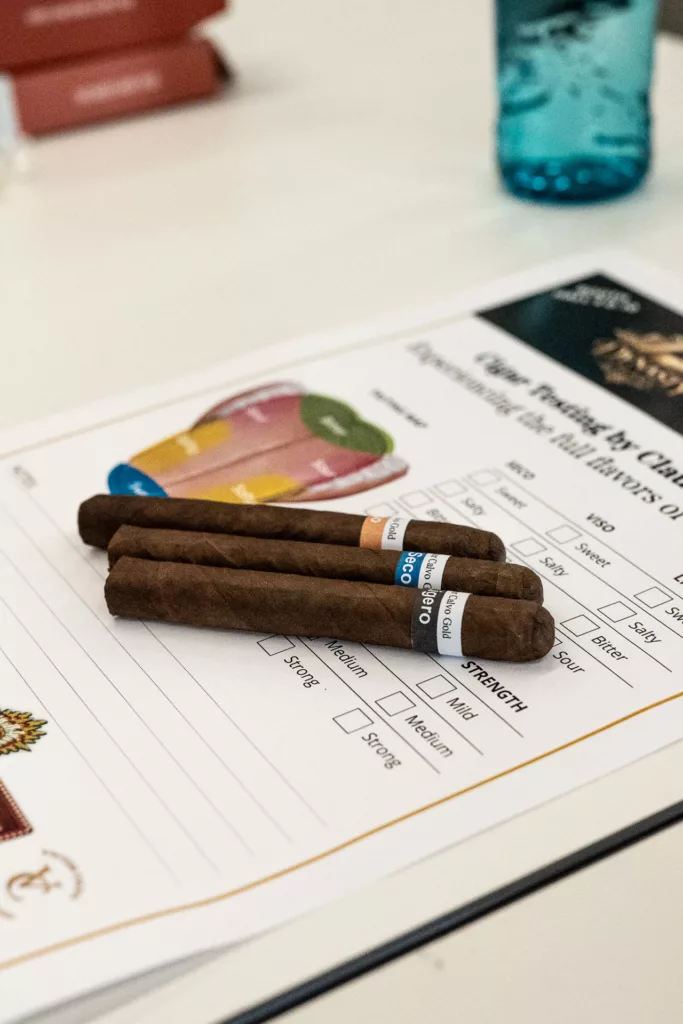
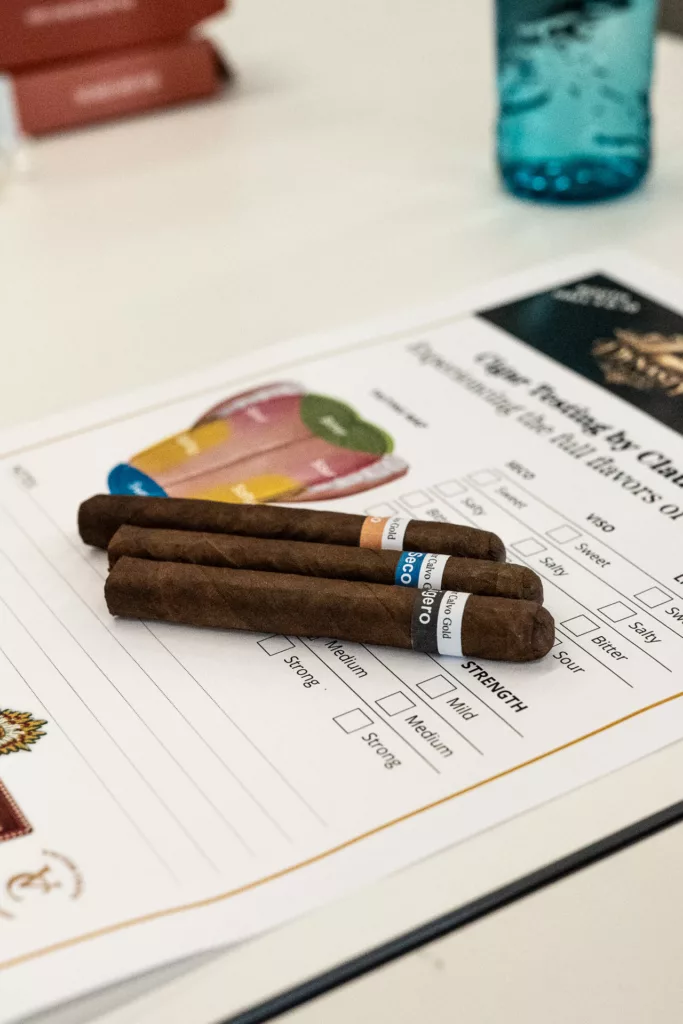
- The seco comes from the bottom of the plant. It is thin, mild and not very aromatic.
- The viso, from the middle, is thicker and more aromatic.
- The ligero, from the top, is very thick, powerful and robust. It burns slowly.
How the smoke ‘tastes’: a matter of pH
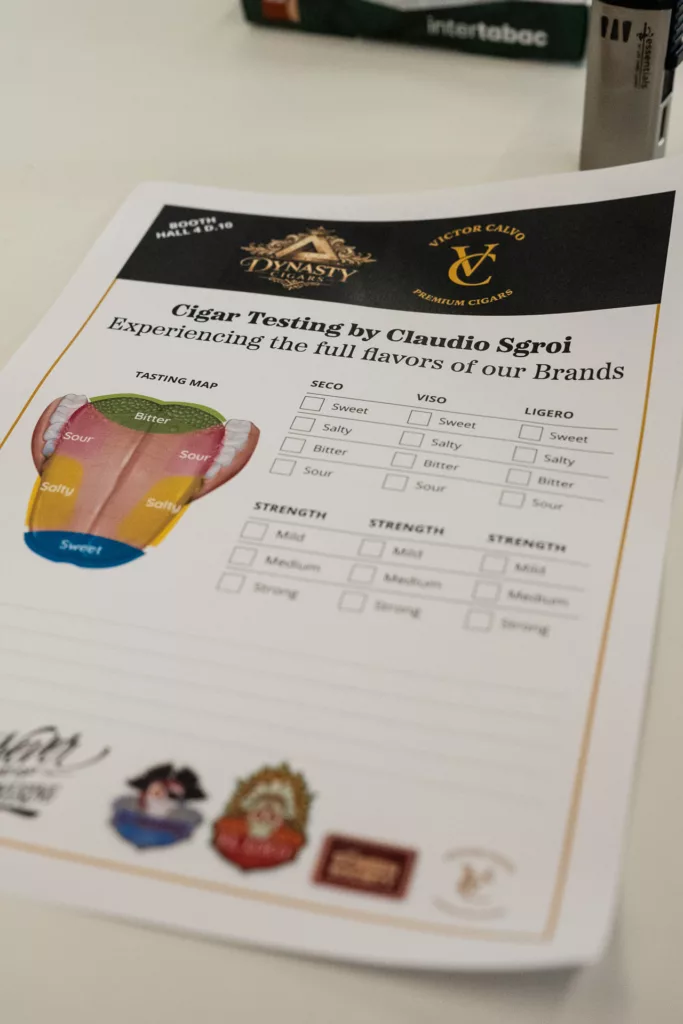
There is neither sugar nor salt in the smoke. The difference in pH between the smoke and the mouth causes a slight irritation of the mucous membranes. The brain locates this irritation and interprets it: at the tip of the tongue, it perceives sweetness; on the sides, saltiness; and in the centre, bitterness. This is why the perception is slower than with wine, and why you need to rinse your mouth and start again several times before reaching a conclusion.
Saliva plays a decisive role. An acidic tobacco produces a lot of it, whilst a salty tobacco dries out the mouth. However, the taste receptors only function when they are moist. For the blender, a cigar that dries out the mouth is a poor cigar, as it impedes the perception of flavour.
The three-leaf test
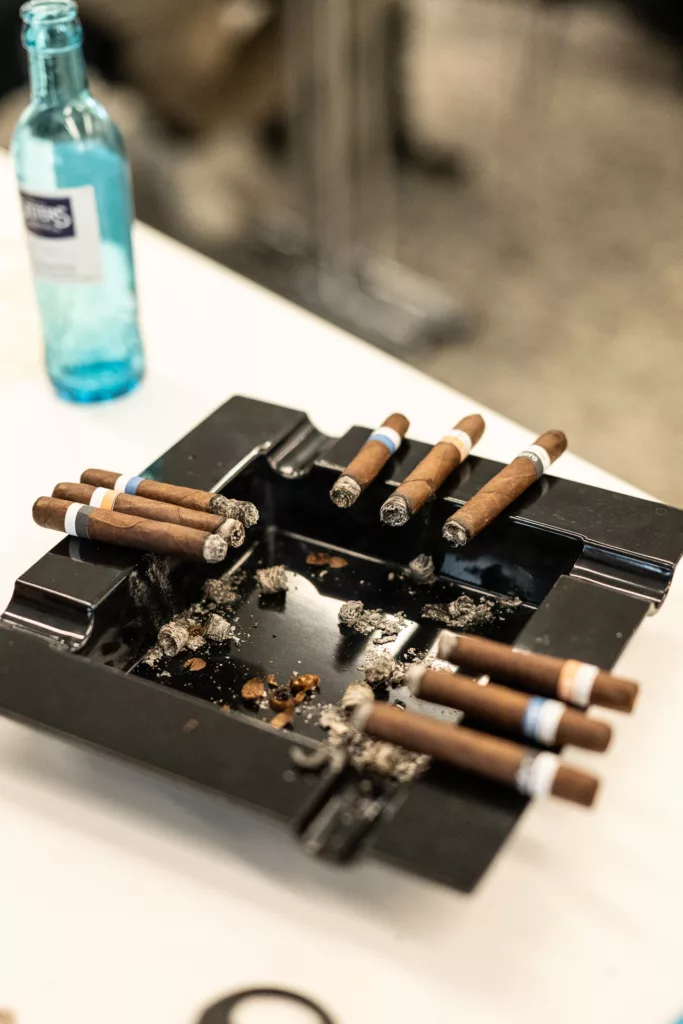
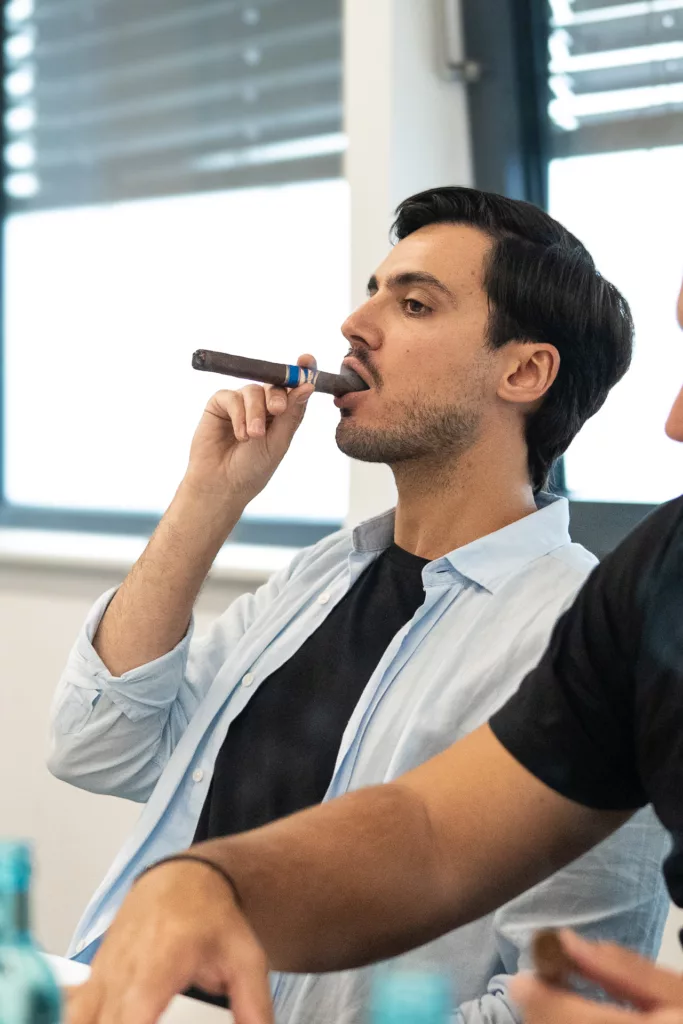
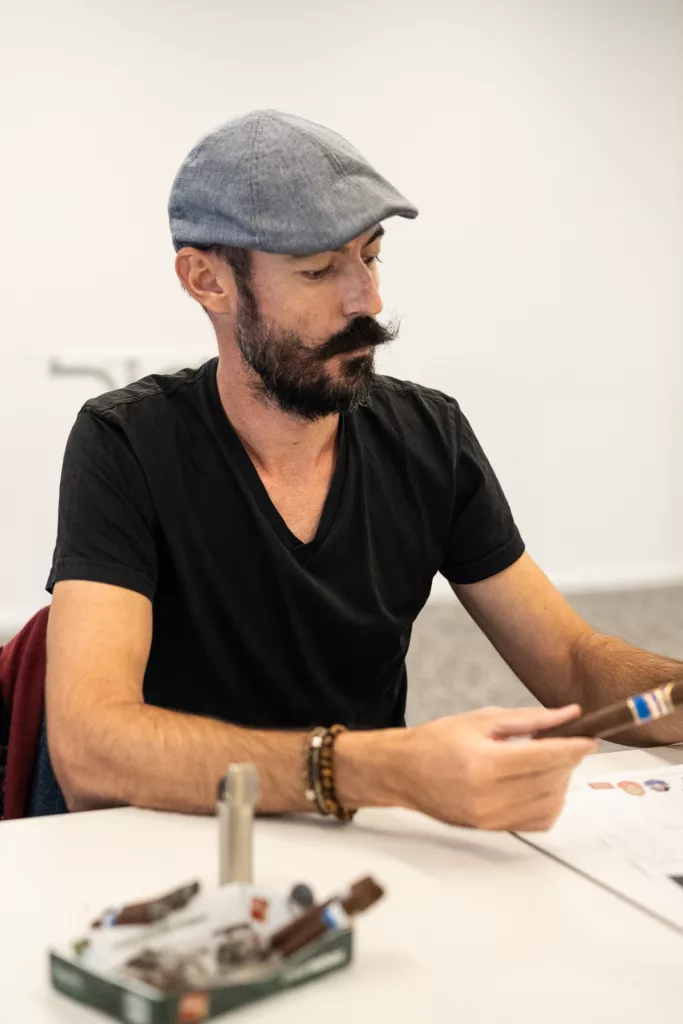
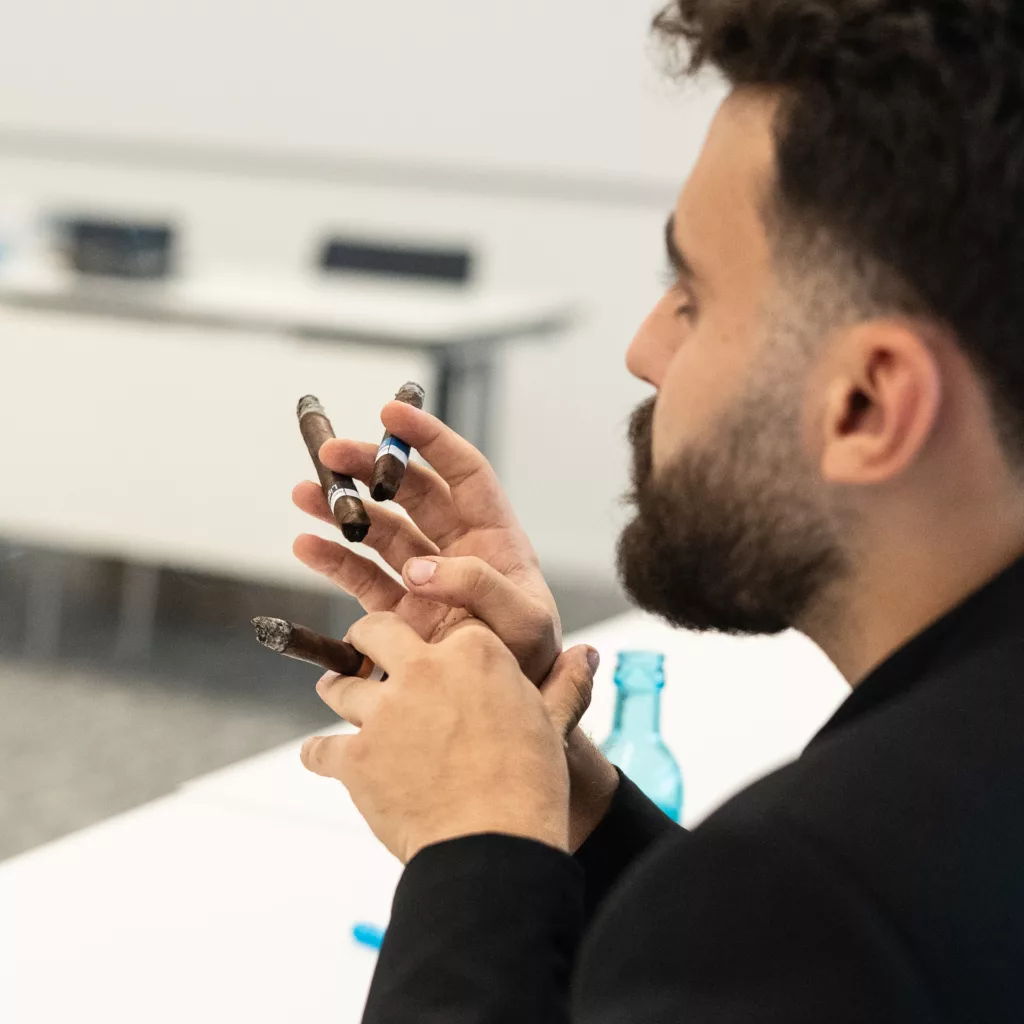
The participants smoked each cigar separately; all were from Nicaragua.
Opinions on the seco were mixed: salty, tart, slightly sweet. The first puff is drying, the next makes your mouth water, and a ‘dirty’ sensation settles at the back of the mouth. After five minutes, the cigar becomes unpleasant.
The viso offers sweetness and makes the mouth water, giving a creamy impression, like a cream-filled pastry. Taken on its own, it becomes flat.
The ligero constricts the throat, reflecting its strength. It has a spicy warmth and produces plenty of saliva, with salty, acidic and bitter notes.
When the three were blended in equal parts, the result proved too bitter and too saliva-inducing. Each tobacco is good on its own, but the blend requires precise proportions, not to mention the binder, ageing, production and quality control.
The keys to a good cigar
- A hint of bitterness. Without it, you miss out on a quarter of the possible flavours. It must remain subtle and not be overpowering.
- A ‘360°’ sensory experience. A one-dimensional cigar, which shifts from sweet to bitter without any nuance, is boring. A good cigar rises, falls and surprises.
- A balance between strength and flavours. Too much strength causes dizziness; too little strength with too many flavours lacks structure. The complexity of the flavours must be supported by the strength.
- Smoke slowly. In a cigar, the internal combustion is hot whilst the exterior remains cooler. This temperature difference releases the essential oils, and thus the flavours. If you draw too quickly, you burn the oils instead of distilling them, as in whisky distillation.
- Retro-olfaction. Drawing the smoke through the nose complements the flavour with aromas.
Technique, sizes and manufacture
A smaller ring gauge concentrates the smoke more than a larger one: Claudio never smokes a 60 at home and prefers ring gauges between 42 and 54. A 5×50 is a classic, as it allows for a blend of two, three or four tobaccos. The lancero, which is very slender, leaves little leeway and remains difficult to roll. The draw also depends on the rolling technique – whether rolled into a tube (entubado) or accordion-style – and a cigar that is rolled too tightly prevents proper combustion. The weight in the hand already gives an indication of the draw.
The choice of wrapper adds further constraints: compact, light-coloured ash; elasticity; and fine veins. The ligero is ill-suited to this purpose. The genetics of the seed matter just as much as the terroir, much like a French Chardonnay – which is mineral in character – that takes on a buttery flavour in California.
A long-term project
Blending is a project: first, you define the desired intensity, the wrapper colour and the sizes, then you fine-tune the blend until you achieve the original vision. We also have to anticipate ageing, as a cigar changes after six months. The master blender cites a blend that took him around three years to perfect. He also works closely with the farmers, as the availability of tobacco from one year to the next is never guaranteed.
For his customers, he sends out a 45-question questionnaire to understand their tastes, as words do not always convey the same sensations.
Origin: moving beyond stereotypes
A cigar made in Nicaragua using tobaccos from several countries remains, in his view, a Nicaraguan cigar, due to local methods, temperature, humidity and rolling techniques. The clichés of the past (mild Dominican, strong Nicaraguan) no longer hold true: we can now find mild, sweet Nicaraguan cigars, and strong Dominican cigars without any bitterness. Finally, he points out that Indonesia, often associated with cheap cigars, is the source of the Cameroon wrapper seed, which is prized and rare.

A few words about the master blender
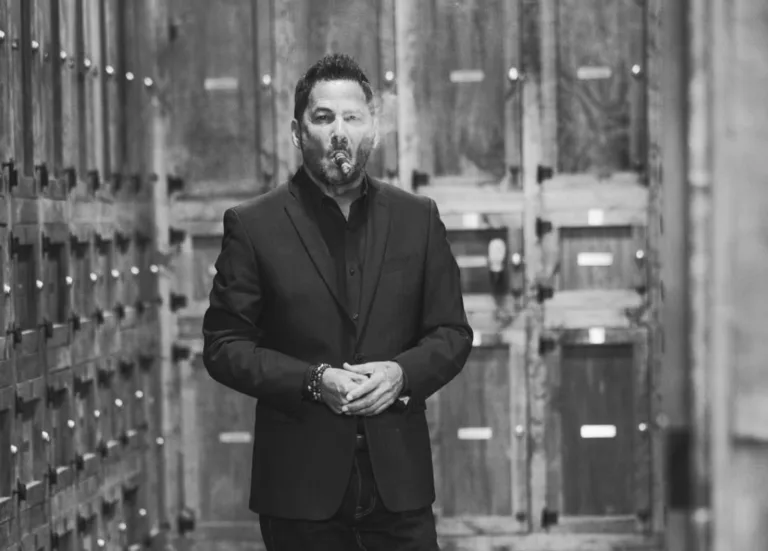
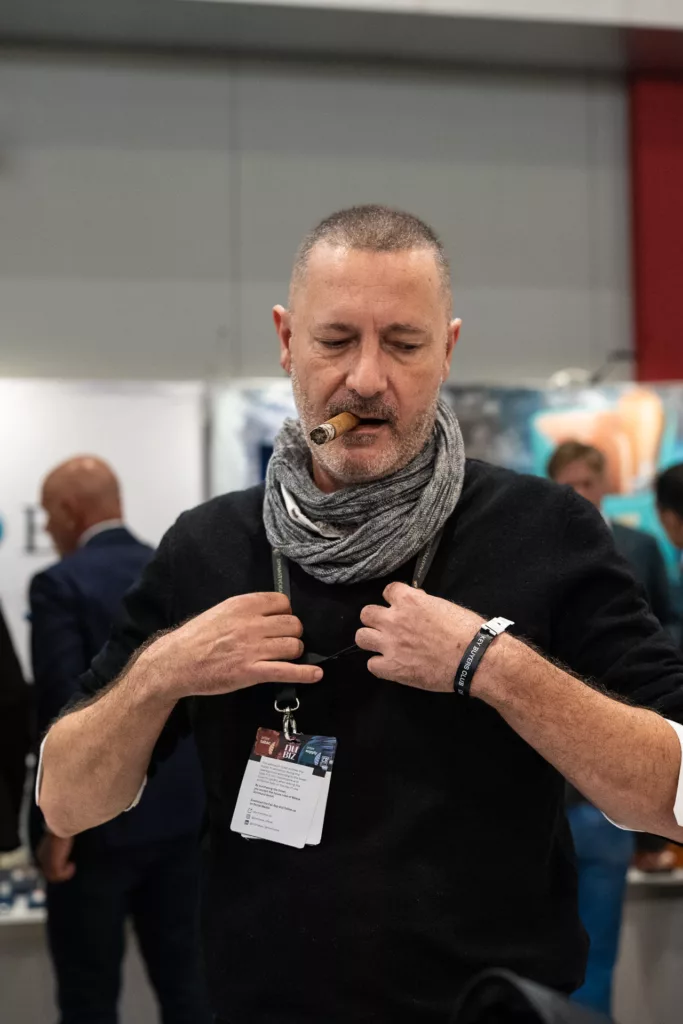
Claudio Sgroi, an Italian genius, was the architect behind the Mombacho range. Trained by Davidoff’s master blender, he led Mombacho from 2012 to 2021, before founding CST Consulting. He is the master blender for the Dynasty Cigar brand, which encompasses the La Bucanera, El Loco and The Screen Society ranges – a collection inspired by old Hollywood.
Key takeaway
A great cigar is one you remember the next day: complex, balanced and surprising. To develop your palate, the blender advises smelling and tasting everything that comes your way, as the memory of aromas is our best tool.
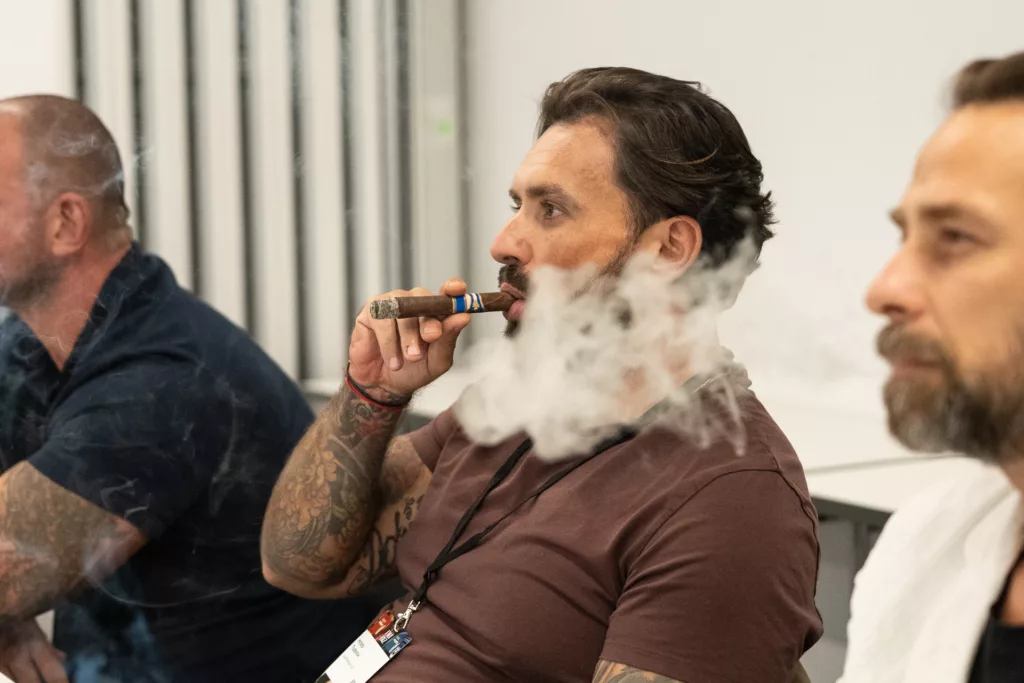
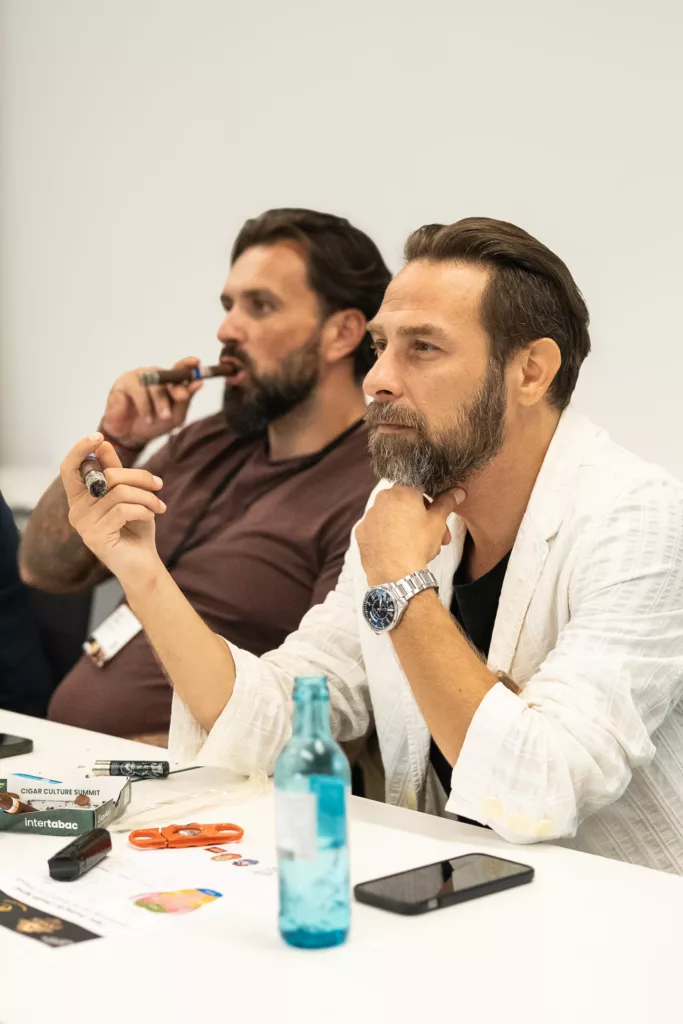
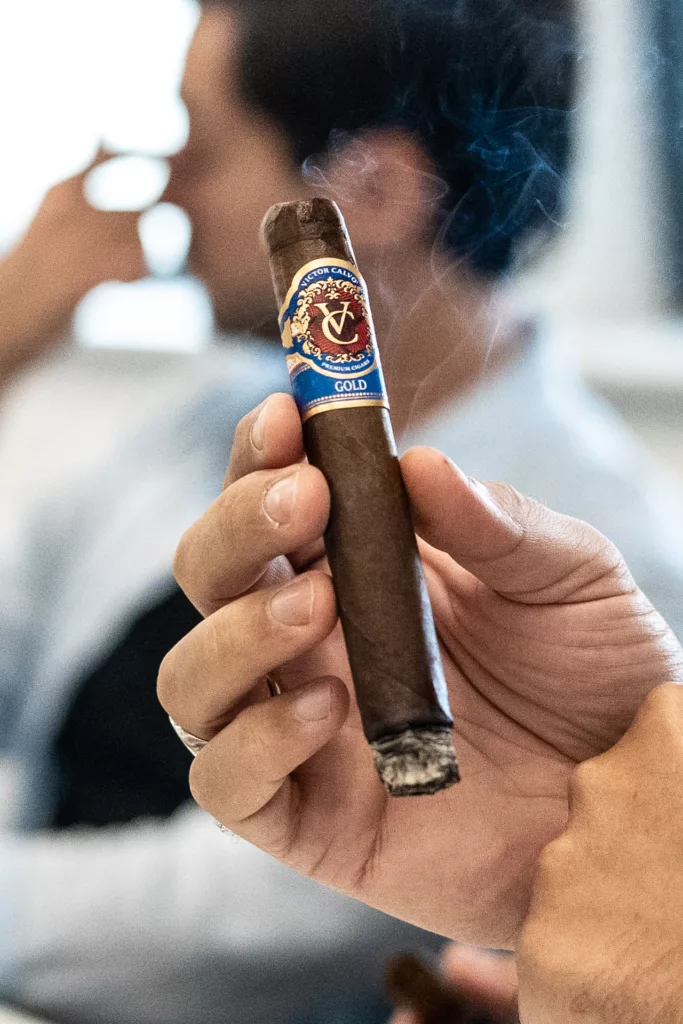
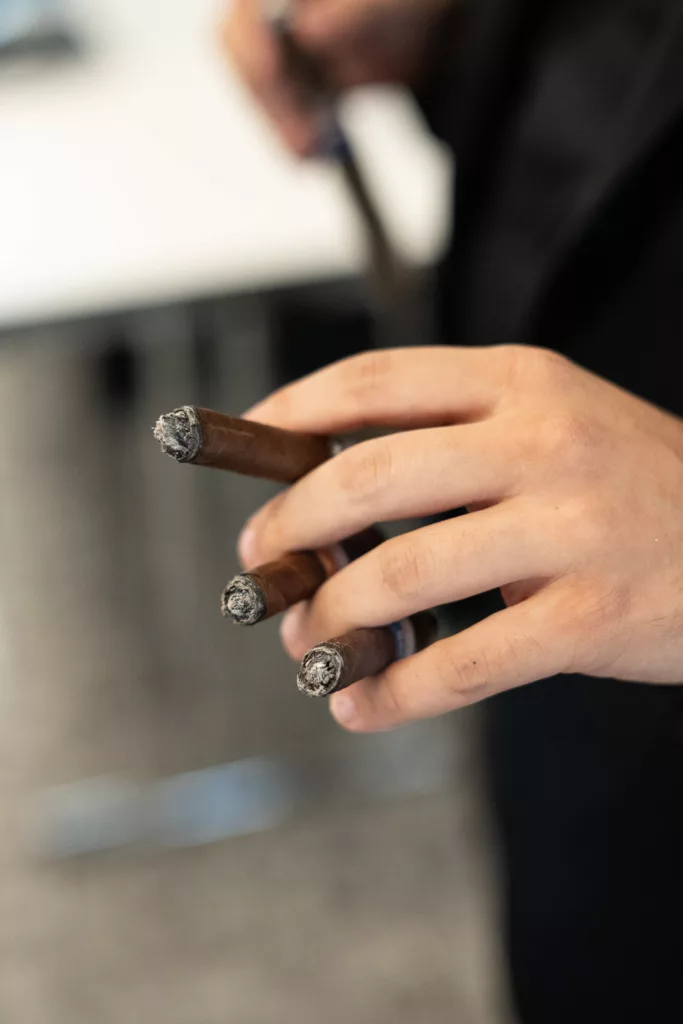
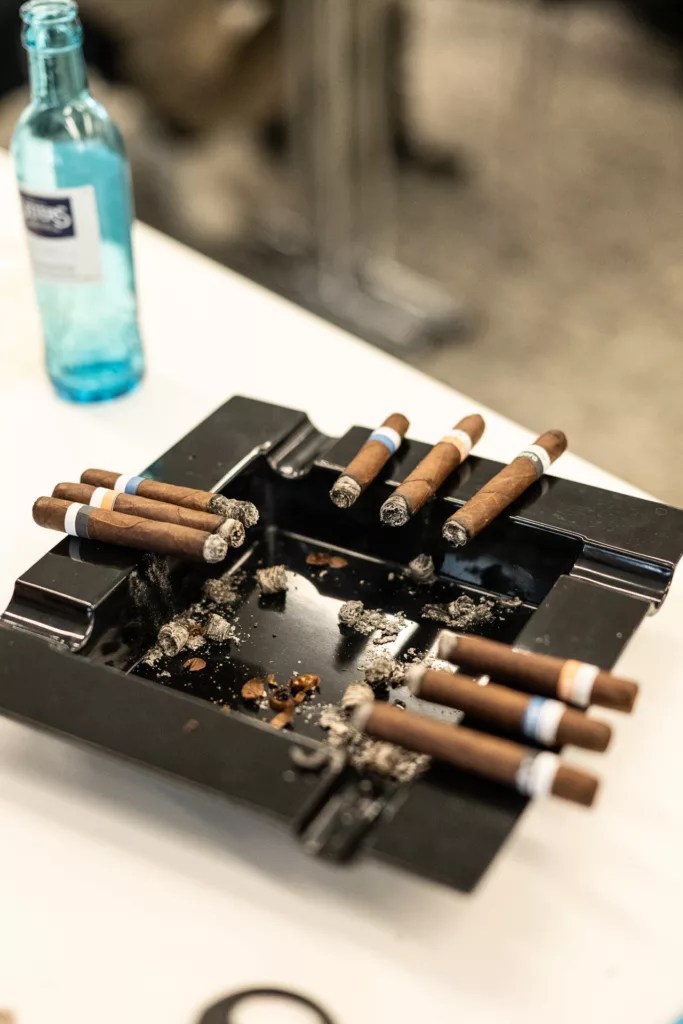
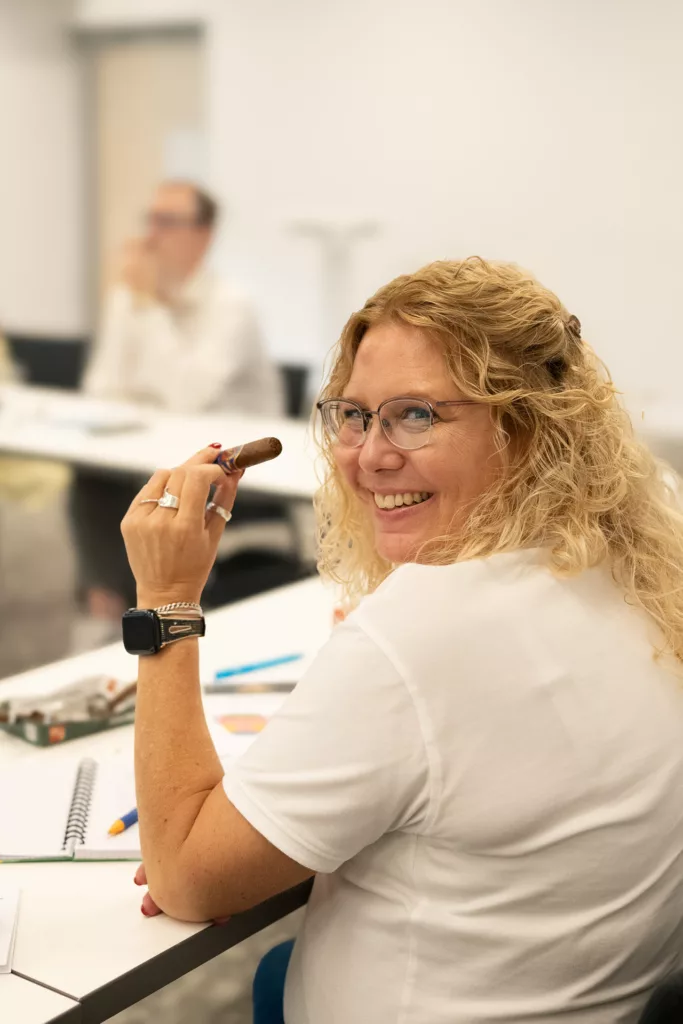
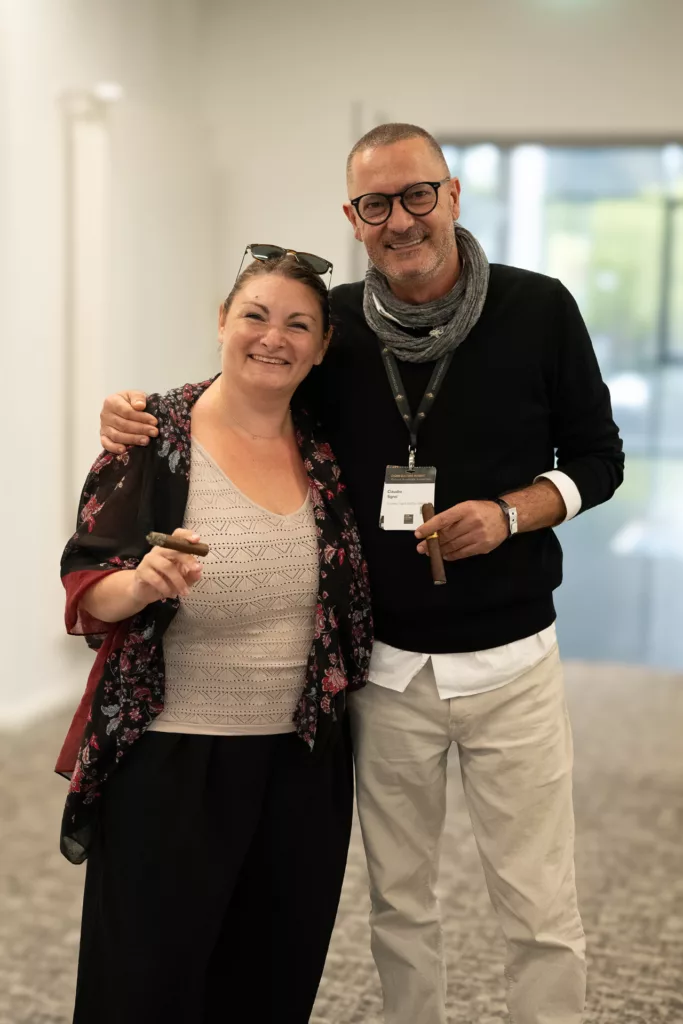
Gallery – Dortmund Masterclass 2026
Photo copyright and exclusive use @neqtar.ch @bluesmokespirit










Browse our articles
Find out more.
Basic principles of sensory analysis
Flint, forest floor, vetiver… these are all terms that can quickly be confusing. When an amateur finds themselves amongst taste specialists, they can soon feel lost in a jungle of technical vocabulary.
But ultimately, isn’t tasting, above all, a matter of emotions?
Pairings
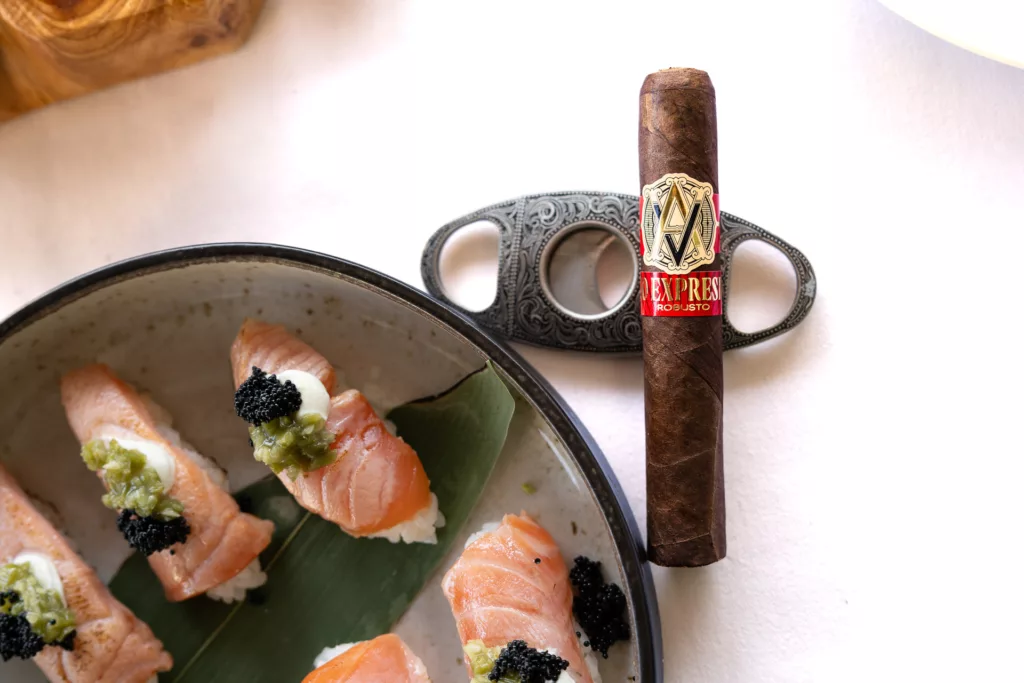
When pairing a cigar with a drink – or a cigar with food – the key question is therefore: how do the characteristics of the cigar interact with those of what is being consumed?
A successful pairing is not based solely on complementarity. It can also play on contrast or balance. The aim, however, remains the same: to create harmony on the palate, where no single element overpowers the others.