Cuba: the benchmark for all growing regions
The legend, and what lies behind it. It’s impossible to talk about growing regions without mentioning Cuba. It was here that the premium cigar was born; it was here that the formats, methods and terminology you find everywhere else first emerged. Nicaragua, the Dominican Republic and Honduras all owe a debt to the island. Let’s explore what still makes the Havana so unique today.
A bit of history
When Christopher Columbus landed in Cuba in 1492, his sailors came across the Taínos, who were smoking rolled leaves. Tobacco made its way across the Atlantic, and within a few centuries the island became the world’s leading producer of cigars.
The 19th century was a golden age: major cigar houses sprang up one after the other. H. Upmann was founded in 1844 by Herman Upmann, a German banker based in Havana, followed by Partagás, Romeo y Julieta and many others.
The 1959 revolution changed everything. The industry was nationalised and many families of tobacco growers and torcedores left the island. They took their seeds and their expertise with them to Nicaragua, the Dominican Republic and Honduras, where they founded the major cigar factories that exist today. As for Switzerland, Zino Davidoff had his cigars rolled in Cuba until 1990, before he too settled in the Dominican Republic.
Since 1994, Cuban cigars have been marketed by Habanos S.A., and their designation of origin is protected.
A terroir that has become the stuff of legend
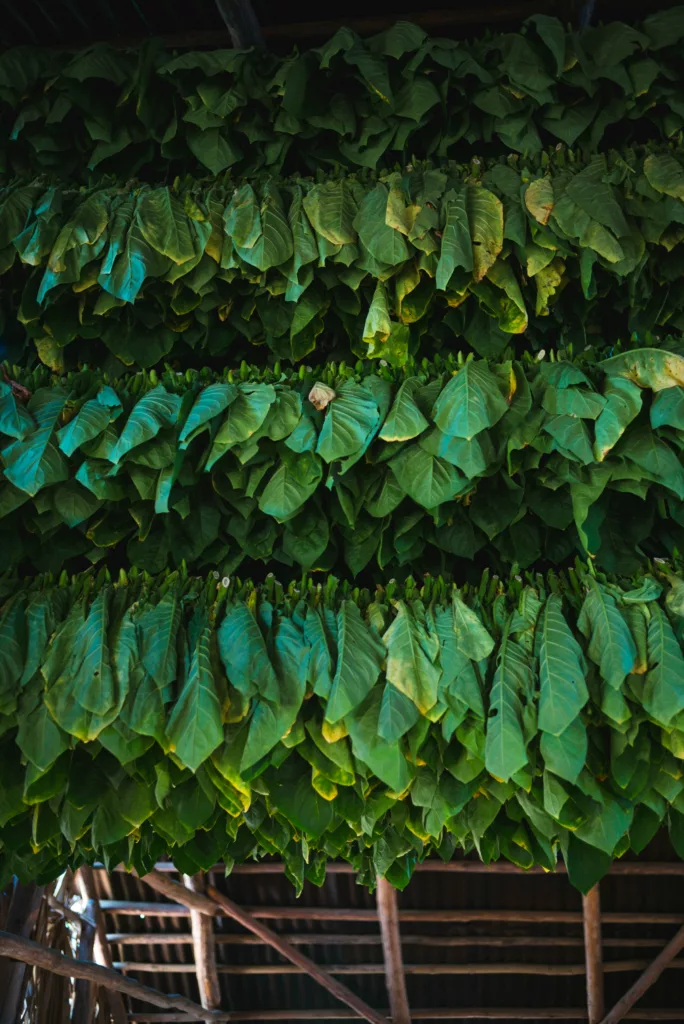
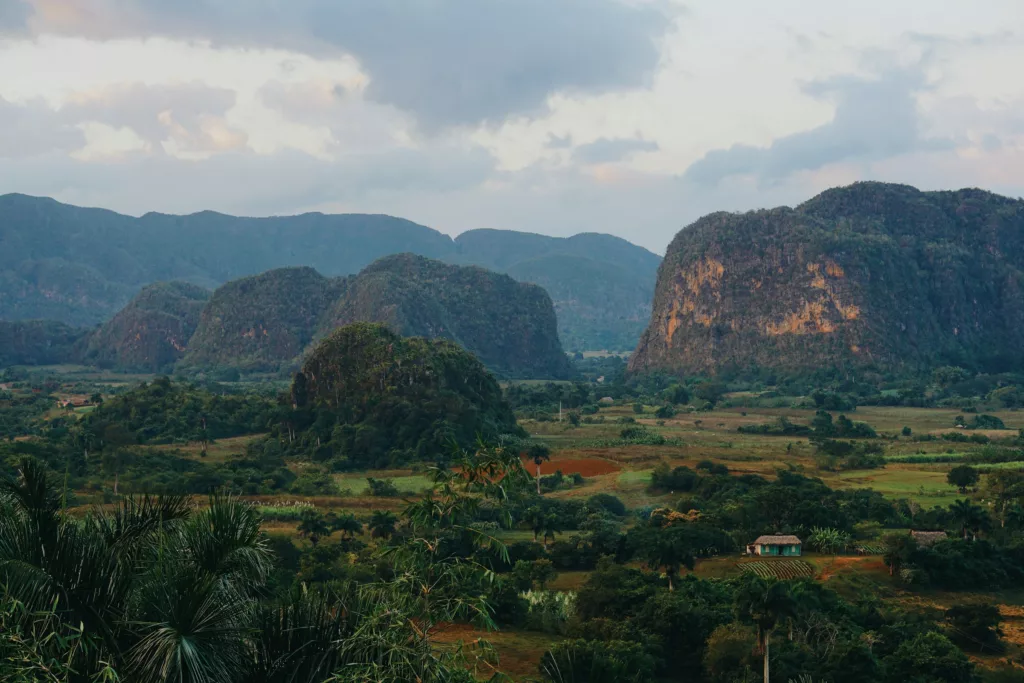
Most Cuban tobacco is grown in the west of the island, in the province of Pinar del Río. The soil there is sandy and loamy, seemingly poor but perfectly well-drained. The tropical climate is tempered by winds from the Atlantic and the Gulf, and the dry season, from October to April, coincides exactly with the tobacco-growing season.
Added to this are local varieties, descended from Criollo tobacco, and generations of vegueros who know every plot of land. It is this combination, rather than any secret, that has earned the Havana its reputation.
However, not all parts of the island play the same role.
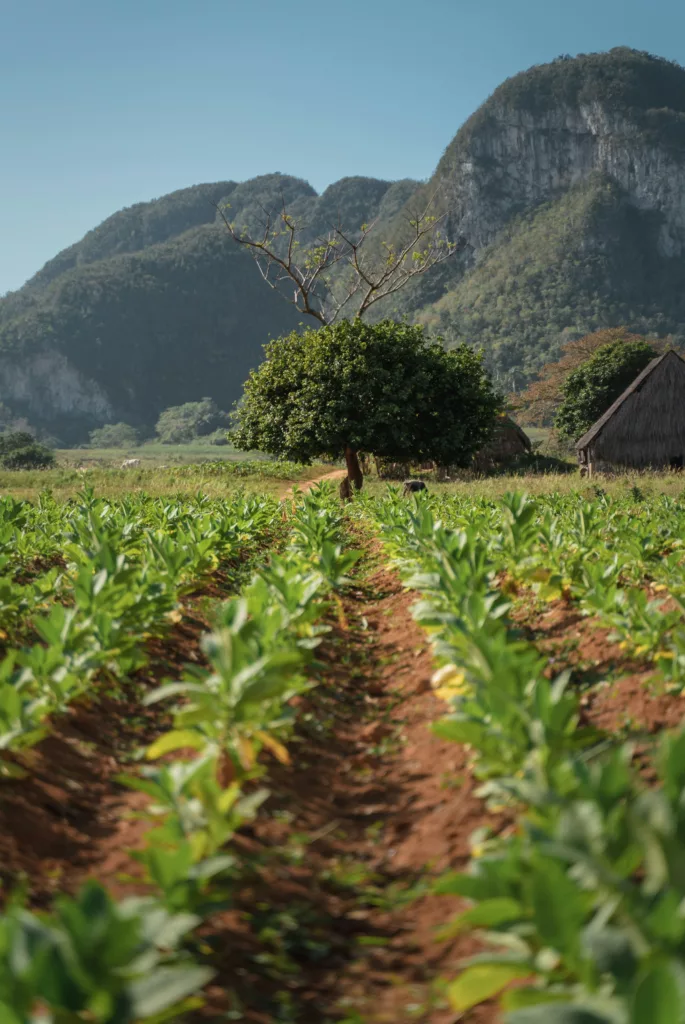 Viñales, Cuba (Daniel Seßler / Unsplash)
Vuelta Abajo: the grand cru
Around San Juan y Martínez and San Luis, the Vuelta Abajo is regarded as the finest tobacco-growing region in the world. This is where the leaves for the finest Havanas come from, and it was here that Alejandro Robaina, the most famous of the vegueros, lived; his plantation was renowned for its wrappers.
Partido: wrappers grown under shade
Near Havana, the Partido region specialises in wrappers. The plants there grow under cotton covers, known as tapado, which filter the sun and produce fine, supple and uniform leaves. A perfect wrapper leaf is essential for demanding formats such as the ‘figurados’ from Cuaba, a brand launched in 1996 to revive 19th-century styles.
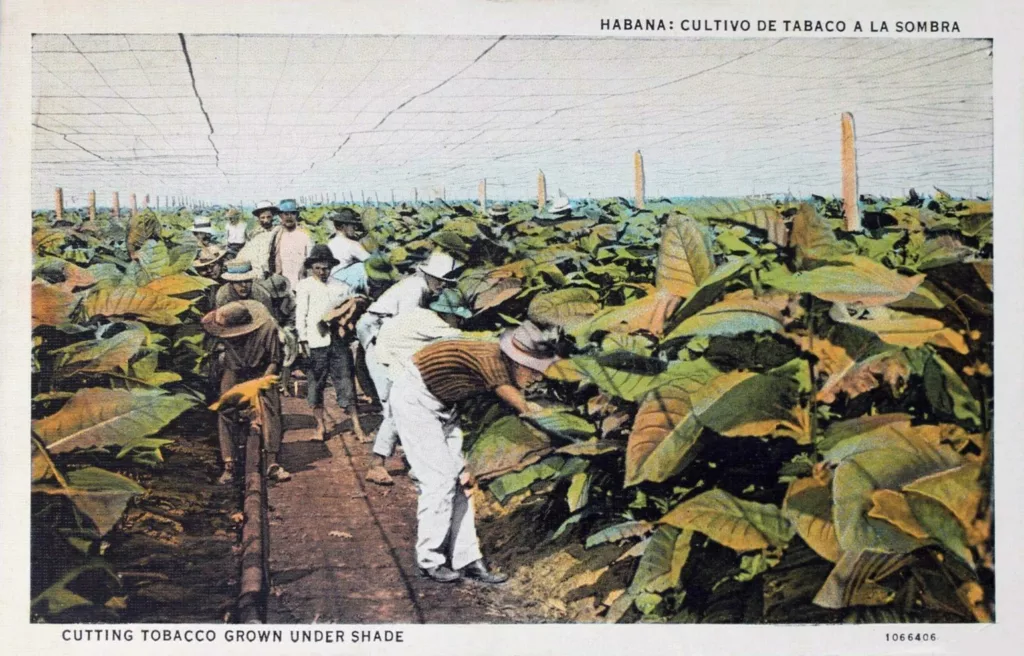 Carte postale Carlos Jordi, La Havane (domaine public, Wikimedia Commons)
 Cienfuegos, Cuba (Tim Stief / Unsplash)
Vuelta Arriba: the centre of the island
Further east, around Remedios, the Vuelta Arriba produces lighter tobaccos, mainly used for the filler. Although less prestigious than the Vuelta Abajo, it is a historic region that serves as a reminder that tobacco was once grown across the whole island.
 Craig Manners / Unsplash
1,200 Petit Upmanns before the embargo
In February 1962, John F. Kennedy was preparing to sign the embargo against Cuba. The day before, he asked his press secretary to find him 1,200 Petit Upmanns, his favourite cigars. Once the stock was safely secured, the President signed the embargo.
The expression of the terroir
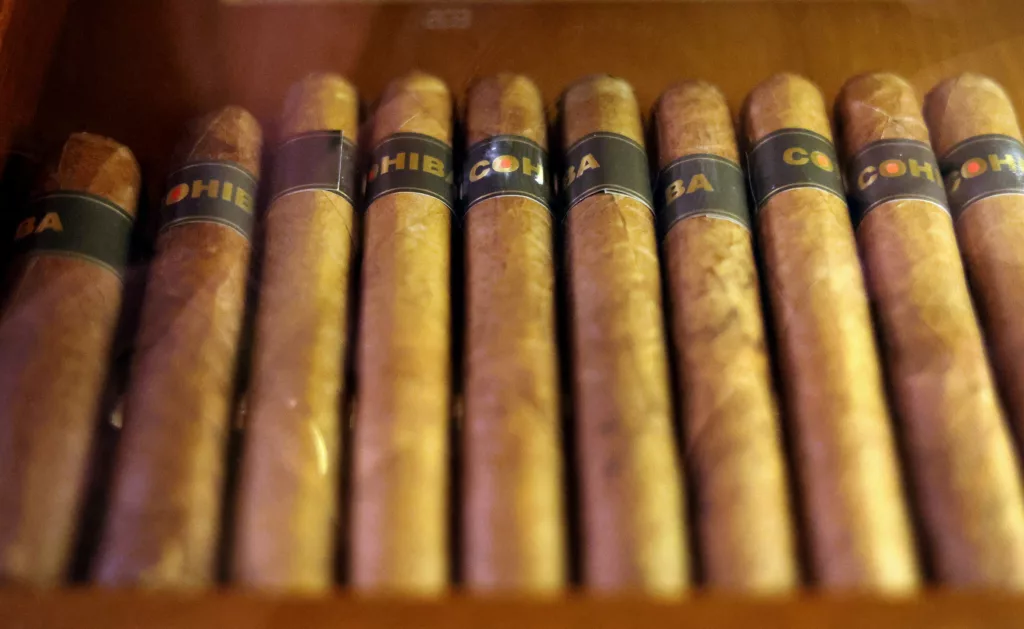
What is known as the ‘Cuban flavour’ can often be summed up in one word: earth. Havana cigars have a distinctive earthy, mineral flavour, sometimes with a hint of salt, that is hard to find elsewhere. They also age remarkably well, and many connoisseurs leave them in their humidors for several years before smoking them.
If you appreciate these characteristics, you’ll love this region:
- notes of earth, leather, cocoa and honey,
- cigars that develop over time in the humidor,
- a complexity that unfolds as you savour them.
What differences can be detected during tasting?
A Havana cigar rarely has the raw power of a Nicaraguan. Instead, it focuses on depth and complexity, with an initial flavour that is often woody or earthy, followed by notes of leather, cocoa, coffee and mild spices. When young, it can be a little rough around the edges; a few years’ ageing round it off considerably.
The flip side of the coin: the consistency of construction and draw can vary from one box to the next, which is part of the charm for some, and a source of irritation for others.
Pairing suggestions
To go with this kind of profile, we’d happily recommend:
- an aged Cuban rum,
- a strong Cuban-style coffee,
- a cognac or a tawny port.
The idea is to choose pairings that allow the cigar’s complexity to shine through.
Conclusion
Cuba remains the benchmark against which all other growing regions are measured. The soils of Pinar del Río, the Partido wrappers, the varieties descended from the Criollo, and the expertise of the vegueros produce earthy, complex cigars that are ideal for ageing. Understanding Cuba means gaining a deeper understanding of everything else.
 Viñales, Cuba (Jennifer Chen / Unsplash)
Our Cuban cigars
-
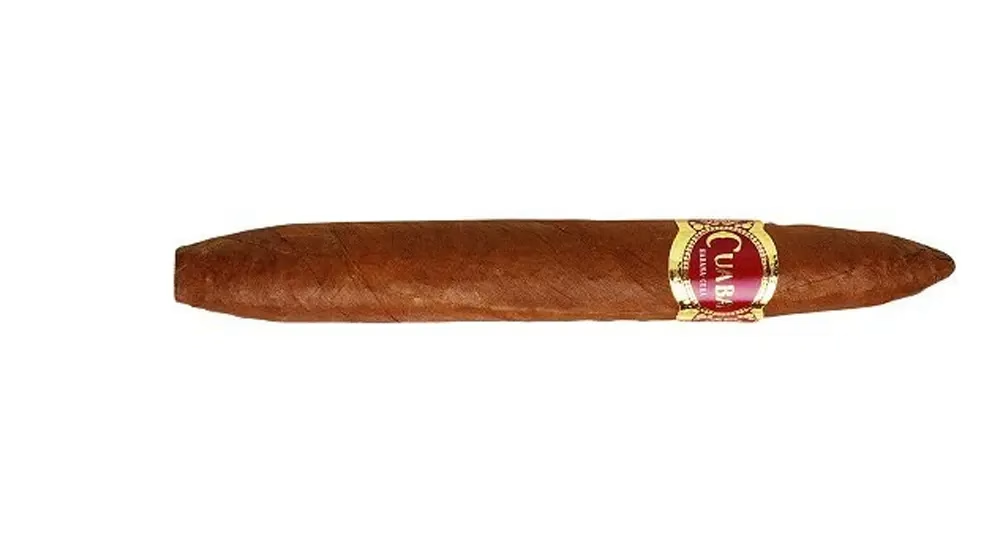
Cuaba Exlusivos
3
14.5
-
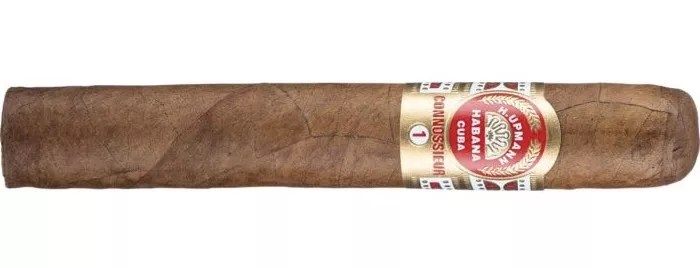
H. Upmann Connossieur No. 1
3
12.7
48